
Growing Outdoors, Harvest & Post-Harvest
When to Harvest Outdoor Cannabis
Oct
If you’re growing outdoors, there’s no universal “right day” to harvest, it’s more of an art than a fixed rule. Your best call comes from watching your plants closely and tuning in to what they’re telling you, while also keeping an eye on the weather.
Ripening cues don’t all show up at once, so it helps to layer what you’re seeing with what the forecast holds.
The list below includes common signals that your plant is ready. If five or more ring true, it’s a good sign you’re within a 48–72 hour window.
Give yourself time to prep your drying space, then go for it when the moment feels right.
1) Trichomes look mostly cloudy or milky, with a touch of amber
When you’re nearing harvest, the best way to check your plant’s maturity is by looking at the trichomes, the tiny, mushroom-shaped glands on the buds that produce and store cannabinoids and terpenes.
Using a macro lens or loupe, focus on the resin heads rather than the surrounding sugar leaves. As harvest time approaches, these glands shift in appearance:
-
Clear trichomes mean it’s still early.
-
Cloudy or milky trichomes indicate peak cannabinoid levels, this is your ideal window for potency.
-
Amber trichomes, especially on the top buds, signal that THC is beginning to degrade slightly into CBN, which may lead to more sedative effects.
Once most trichomes have turned cloudy with a small amount of amber mixed in, your plant is likely ready. This is your cue to start planning your harvest.
2) Water uptake slows
As plants reach maturity, they naturally stop drinking as much. If your soil is staying moist longer than usual between waterings, and nothing else has changed in your environment, it could be a sign that your plant is nearing the end of its life cycle. This shift often happens in the final week or two before harvest.
3) Calyx swell and pistil color shift
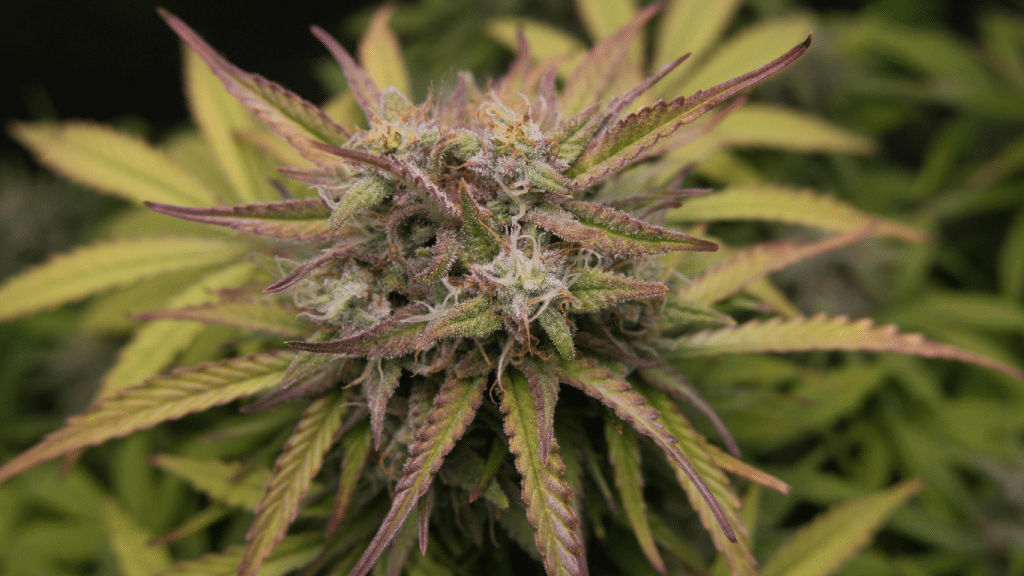
The calyxes (the small, teardrop-shaped pods that make up your buds) begin to swell and feel full to the touch. You’ll also notice that most pistils, those white hairs sticking out of the buds, have darkened and curled inward. A few new white pistils may still pop up late in the season, especially after a light rain or cooler night, but the majority should be amber, orange, or reddish by harvest time.
4) Aroma peaks and the “green” smell fades
This is one of the best parts: the smell. As plants reach maturity, their aroma becomes richer, more distinct, and true to the strain. If your garden still smells grassy or like fresh-cut greens, it’s not quite ready. When the scent is dialed in and strong, whether that’s fruity, skunky, gassy, or floral, you’re likely in the harvest window.
5) Natural fade on fan leaves
A soft, even fade on the larger fan leaves is another sign that your plant is wrapping up its life cycle. This natural senescence (aging) is different from stress or damage. Look for a gentle yellowing that moves from the bottom up, not spotting, curling, or crispy edges. A healthy fade means your plant is shifting energy into the buds.
6) The forecast matters
Even if your plant isn’t perfectly ready, Mother Nature can make the final call. If there’s heavy rain in the forecast, days of high humidity, or a frost warning, you may need to cut earlier than planned to prevent mold or damage. Harvesting the most mature tops and letting lower buds go a bit longer is a good middle-ground option.
7) You are in the maturity window
Timing depends on the type of seed and your climate.
-
Autoflowers generally finish 70–90 days from sprout.
-
Photoperiods vary more but tend to finish in late September through October.
Use breeder estimates as a ballpark, but always listen to the plant. External cues are helpful, but your best harvests will come from watching how your specific plants develop in your specific conditions.
Putting It All Together: How to Decide When to Harvest
Once you’ve gone through the above harvest readiness checklist, here’s how to use what you see to make the call:
- Most of the Signs Are There & the Forecast Looks Good
- If you’re noticing several signs of maturity, such as cloudy trichomes, swollen calyxes, and a strong aroma, and the weather looks dry and stable for the next few days:
- Harvest the whole plant. This is your ideal window for quality and ease.
- Most of the Signs Are There, But Rain or Frost Is Coming
- If your plant looks nearly ready but the forecast calls for bad weather:
- Cut the top colas now, where buds mature first.
- Leave lower flowers a few more days if conditions allow.
- If your plant looks nearly ready but the forecast calls for bad weather:
- Only a Few Signs Are Showing
- If you’re seeing just two or three signs and trichomes are still mostly clear:
- Wait 2–3 days and reassess.
- Your plant is getting close, but it’s worth holding off for peak flavor and potency.
- If you’re seeing just two or three signs and trichomes are still mostly clear:
- One or No Signs
- If maturity signals are still mostly absent:
- Keep waiting.
- This isn’t the time to harvest. Focus on keeping air moving around your plants, manage moisture, and continue monitoring. Harvesting too early can reduce yield and quality.
- If maturity signals are still mostly absent:
Tools for cutting day
Before you harvest, gather everything you’ll need to make the process smooth, clean, and organized, no matter your setup or experience level:
-
Sharp, clean shears – Sticky plants can gum up your tools fast. Keep a bottle of isopropyl alcohol nearby to sanitize between plants.
-
Gloves – Help protect delicate trichomes and keep your hands from turning into sap traps.
-
Plant labels – Tag each strain as you go, especially if you’re drying multiple varieties in the same space.
-
Drying setup – Whether it’s a closet, tent, or spare room, you’ll need hang lines, drying racks, or mesh trays, something to support airflow and avoid clumping.
-
Environment monitor – Use a thermometer and hygrometer to maintain steady temperature and humidity. Aim for 60–70°F and 55–65% RH.
-
Keep it dark – Choose a well-ventilated space out of direct sunlight to protect aroma and potency.
Check out our article, what to do after harvest, for more info about the drying and curing process.
FAQs
Q: My trichomes are cloudy but the pistils are still half white. Cut or wait?
A: If most heads are milky and calyxes are swollen, you are in range. In dry weather, waiting 48–72 hours can tighten the finish.
Q: What if my plant is ready but a 4-day rain is coming?
A: Take the most exposed tops now and hang them. Leave sheltered lower sites a few more days and reassess after the weather.
Q: How do I know it is too late?
A: Widespread amber on upper colas and reduced aroma quality. Do spot checks for rot. If you see it, remove those sites immediately and adjust your plan.